
Take them out while they float. Sink them where they do some good.
Derelict steel vessels are Government's problem the day their owners walk away. We take them off the quay, strip and clean them to the US standard for vessel reefing, tow them out and sink them upright as charted dive sites.
Nobody's boats. Government's problem.
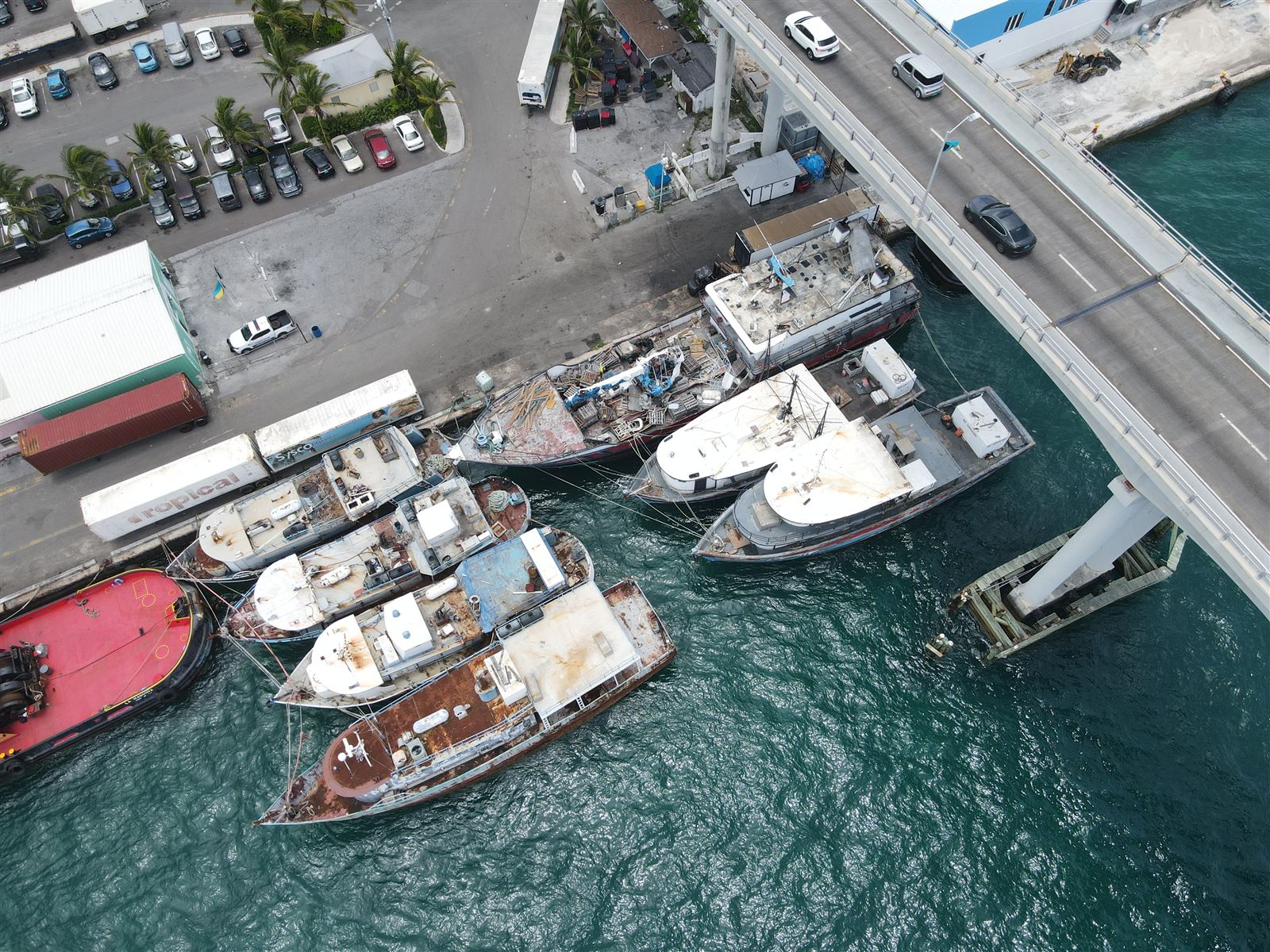
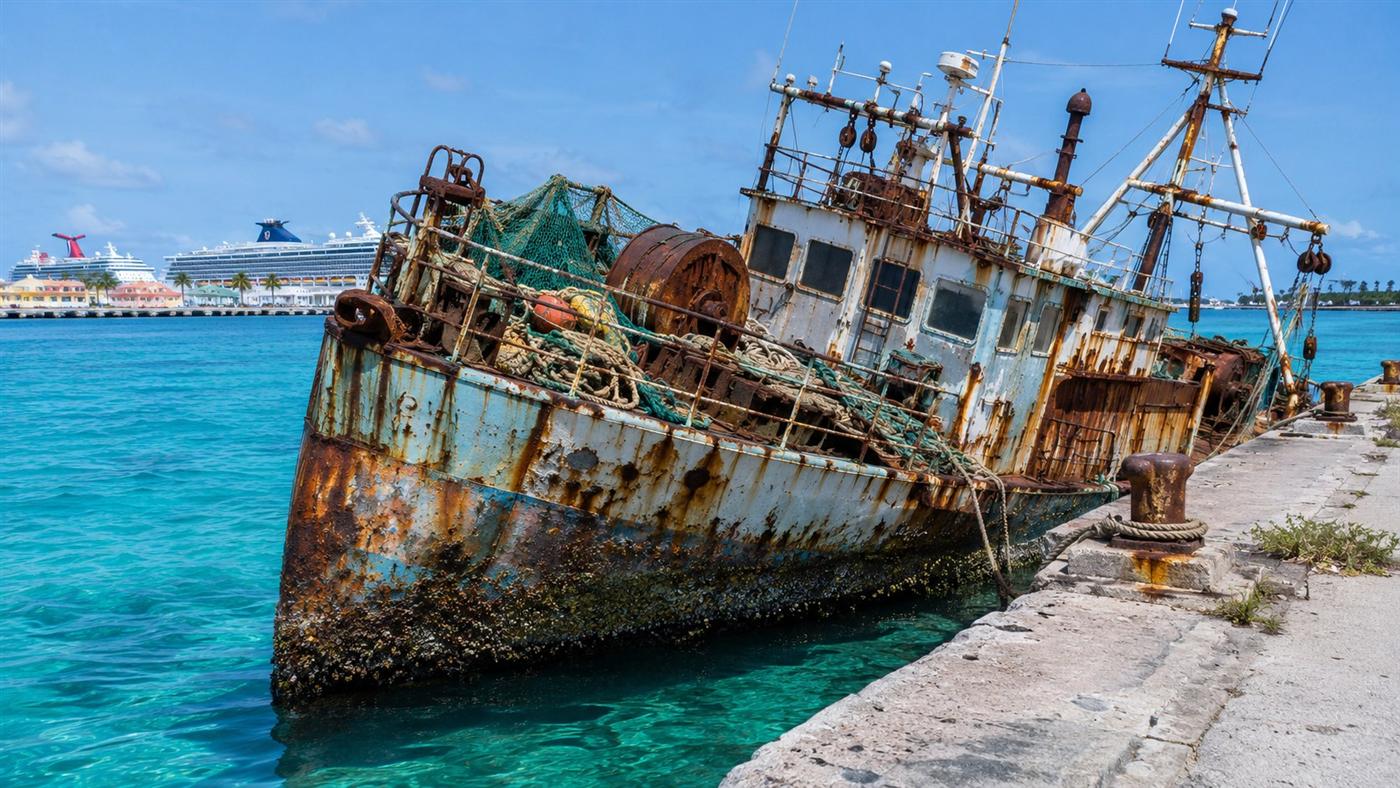
Steel hulls lie abandoned at Potter's Cay, along the harbour wall, at Montagu and at the Family Island docks, with fuel, lubricating oil, batteries and nets still aboard. The owners are gone, or not worth suing.
Each one is sinking where it lies. When she goes, the harbour gets an oil sheen, a blocked berth, a hazard to the mailboats and a headline. Once a hull is on the bottom in the harbour, lifting it is a salvage job: several times the cost of taking her out while she still floats, and the Treasury pays it.
In July 2026 a former senior Port Department official told The Tribune that wrecks have sat for years from Potter's Cay to the Exumas with little salvage effort. Fines have been announced. A fine does not lift a boat.
There is no local contractor set up to take a derelict, clean her to a standard and dispose of her. That is the gap this programme fills, under the Port Department's authority to deal with derelict vessels where no owner can be found.
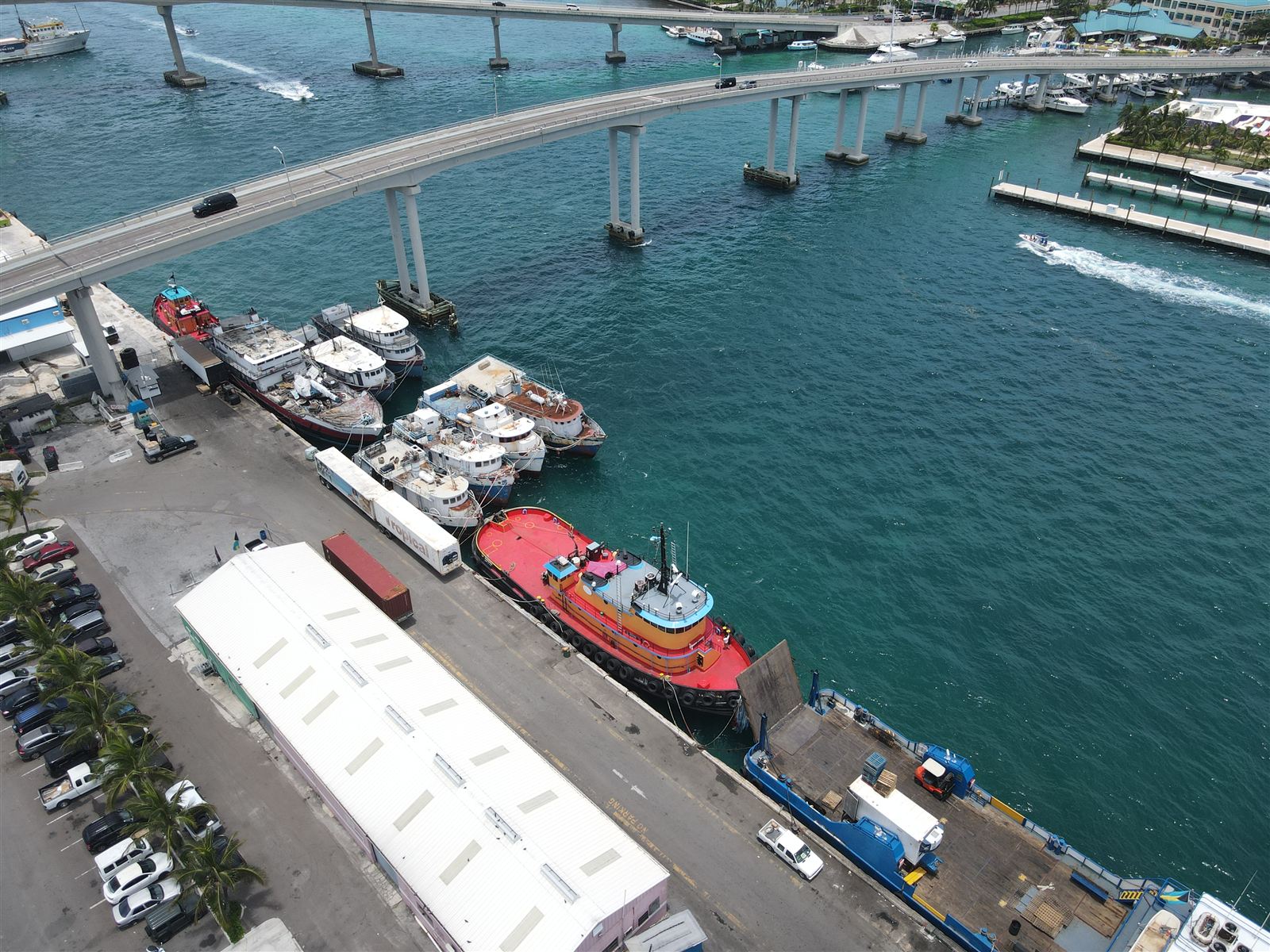
Steel, afloat, and nobody's.
Three size classes cover everything from a harbour tug to a retired island freighter. Each one is priced after survey, by class, for Government and for private owners who want a clean exit.
Steel, up to 65 ft
Tugs, fishing boats, workboats. Machinery lifts out with the barge crane. Typically four to six weeks from the quay to the bottom.
Steel, 65 to 120 ft
Retired mailboats and island freighters: the hulls that worry the Port Department most. More hazmat allowance, a mobile crane for the engines, a dive site the operators will name.
Steel, 120 to 200 ft
Coastal freighters and small ships. Same method, more time at the lay-up berth, a deeper site so there is at least 50 ft of water over her highest point.
Fibreglass and wood
They break up, shed debris and are not accepted as reef material anywhere with published standards. We refloat, strip and cut them up for the landfill under the same mobilisation, so the harbour is actually cleared.
Candidates: steel hull; afloat or refloatable; title clear, owner release in hand, or Port Department authority to dispose. Phase 1 takes one Class 1 and one Class 2 vessel from the Port Department's list. Every other hull goes at the class rate.
What comes out of a hull before she goes down.
We follow the US Environmental Protection Agency and Maritime Administration National Guidance: Best Management Practices for Preparing Vessels Intended to Create Artificial Reefs, the document every serious reefing programme in the Americas works to. Nothing that floats, leaches or snags stays aboard. Every item is logged and every fluid is receipted.
| Material | What happens to it |
|---|---|
| Fuel, lubricating oil, hydraulic oil, bilge water, sludge | Pumped out by a licensed waste-oil contractor; every tank opened, cleaned and dried |
| Refrigerants, batteries, fire-suppressant cylinders | Recovered and removed, with mercury switches and fluorescent tubes |
| Asbestos and PCBs | Sampled by the surveyor first; lagging, gaskets, floor tile, cable insulation and light ballasts removed under containment and exported, because there is no local disposal route |
| Loose and flaking paint, antifouling | Scraped where it would shed; antifouling where the survey requires it |
| Fabrics, mattresses, foam, insulation, panelling, plastics, loose wiring, fishing gear | Everything that can float or leach is stripped to bare steel |
| Engines, generators, pumps, shafts, propellers | Lifted out by the barge crane; resale or scrap credit back to the programme |
| Doors, hatches, masts, rigging, sharp projections | Removed or welded open; diver access openings cut, edges dressed, so every compartment is safe to swim through |
| Gas-free certificate | A marine chemist certifies the hull before any cutting torch is lit and again before the tow |
Eight steps, by the book.
Written up as a checklist, costed line by line, and the same for every hull. Controlled flooding, upright landing, charted the same day.
Clear title and get the approvals
Lien search, owner release or Port Department derelict authority, deletion from the register. Department of Marine Resources artificial-reef approval, DEPP environmental clearance, Port Department permission and a Notice to Mariners.
Survey: condition, stability, hazmat
A licensed marine surveyor reports on condition and stability and writes the scuttling plan: where she floods, how she lands, how much ballast she needs. A hazardous-materials survey samples for asbestos, PCBs, lead paint and TBT antifouling so the strip-out is planned, not discovered.
Tow to a lay-up berth and strip her
With pumps aboard from day one. Everything that can float, leach or snag comes out. Machinery comes out and is sold or scrapped against the job. Asbestos and PCB items go out under containment to drums for export.
Remove every fluid
Fuel, lube, hydraulic oil, bilge and sludge pumped by a licensed contractor; tanks opened, cleaned and dried; the marine chemist issues the gas-free and hot-work certificate before any torch is lit.
Cut her for divers and for sinking
Openings through bulkheads and decks so divers can pass through every compartment and trapped air can vent. Doors and hatches removed or welded open. Masts and rigging that would stand too close to the surface cut away. Flooding openings cut below the waterline and plugged with bolted plates for the tow. Concrete ballast placed low so she lands upright.
Tow her out on pumps
Two or three gas trash pumps keep the bilges dry. A tug tows her to the site inside a weather window, with a second vessel in company, and she is made fast to moorings our divers pre-set on the surveyed position and heading.
Flood and sink her
Plugs are pulled in the order the scuttling plan sets, lowest compartments first, and the pumps are reversed to flood her. Flooding is controlled so she goes down level and lands on the sand upright. An exclusion zone is kept and the Port Department is advised before and after.
Survey and chart
Divers fix her position, heading and the depth over her highest point the same day. The clearance is reported to the Port Department for charting. A mooring buoy is set so boats tie up instead of anchoring. Follow-up dives at three and twelve months record settlement and fish life.
What the morning looks like.
Flat calm, first light, a weather window of at least 48 hours, and a very short list of people on the water.
Tow begins
Pumps running, tug on the bridle, the work barge and the support boat in company. The Port Department has the Notice to Mariners out and the exclusion zone is published.
On the moorings
She is made fast to the four-point moor our divers set the day before, on the surveyed heading. The surveyor checks trim and ballast one last time.
Pumps reversed
The plugs come out in sequence, lowest first. Water comes in through the cut openings in a controlled way. Nobody is aboard.
She settles
Twenty to forty minutes from first flooding to the deck going under, level, stern first by design. No explosives, no fire, no smoke.
Divers on the wreck
Position, heading and the depth over the highest point are fixed. The clearance depth goes to the Port Department the same day and the mooring buoy is set.
First dive survey
Photographs and a condition report. The site is named, the dive operators are told, and the first fish are already inside.
From the Port Department's problem to a dive site with a name.
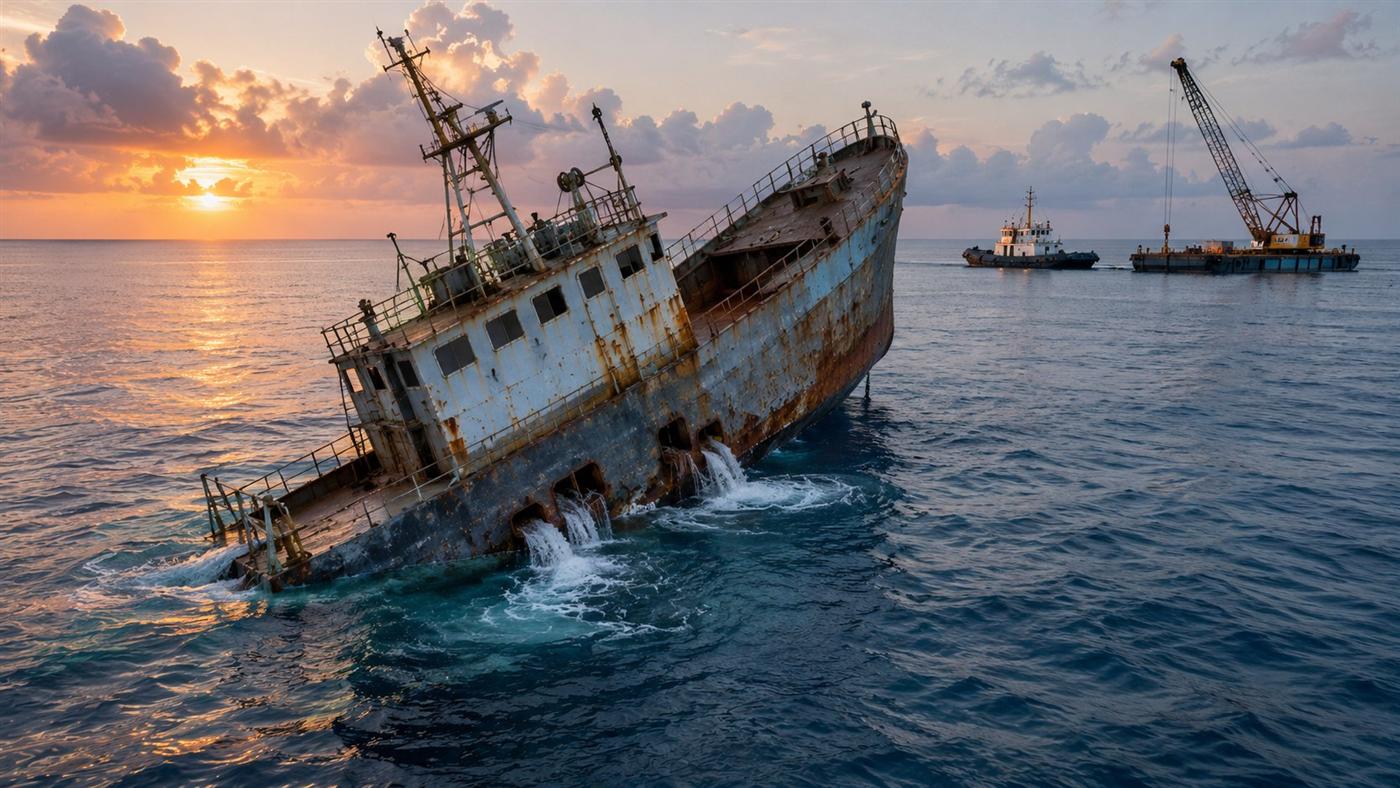
What the harbour gets
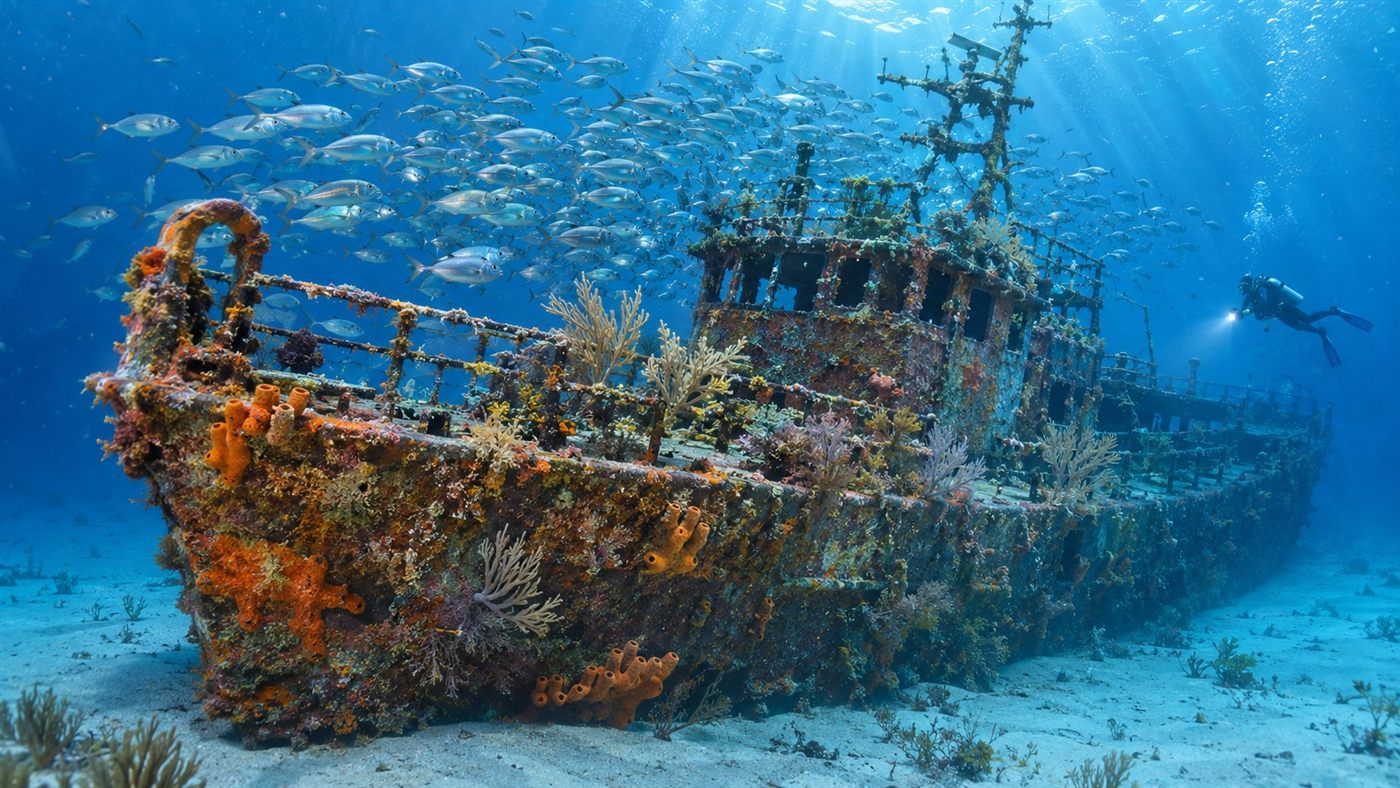
- One less hull going down at the quay with fuel aboard, and one less salvage bill.
- A charted wreck in 70 to 130 ft of water, with 50 ft or more over the highest point.
- A mooring buoy, a dive site the operators will name, and a reason for a dive boat to leave the dock. Every boat on the wreck is one not on the natural reef.
- Baseline and follow-up surveys, fish counts at three and twelve months, and the as-built chart lodged with the Port Department.
Things people ask about reefing a vessel.
Why not just scrap them?
Nassau has no steel mill and no dry dock big enough to break a freighter. Scrapping means cutting a hull into pieces at the quay over weeks, with the same strip-out first, and paying to ship the steel out. Reefing does the clean-up once and leaves something useful on the bottom.
Is sinking a ship bad for the sea?
An unprepared hull is. A prepared one is not: every fluid, every plastic, every fabric and every hazardous material is gone before she leaves the dock, and bare steel on sand becomes habitat within months. Florida, Texas, Hawaii, the Cayman Islands and the US Navy all reef vessels to the same standard we use.
Do you use explosives?
Never. Controlled flooding is the standard method for a vessel of this size. It is quieter, safer and lands her upright.
How deep, and where?
Sand or rubble bottom in 70 to 130 ft off south-west New Providence for Phase 1, clear of live coral, seagrass, shipping lanes, cables, anchorages and marine protected areas, and with at least 50 ft of water over her highest point. Sites are surveyed and dived before they go to the agencies.
Who owns the wreck afterwards?
The Government of The Bahamas. Positions and the as-built survey are handed to the Department of Marine Resources and the Port Department, and the site is charted.
Can a private owner use this?
Yes. A resort, a shipping company or an estate with a hull to lose can have it reefed at the class rate, subject to the same approvals.
What about the fibreglass boats?
They are cut up ashore and landfilled at a per-foot rate under the same mobilisation. The harbour is only clean if those go too.
Have a hull? Walk the harbour with us.
Tell us where she is and what she was. We will tell you what it takes.